
Learning the Veld: A Local's journey into our soil, plants, and deep history

Whenever I walk my dogs near the Zoute River here in Hopefield or look out over the beautiful Berg River Estuary in Velddrif, I find myself completely slowing down.
I'm no botanist or environmental expert—just a deeply curious local who wants to listen to the land, understand how everything flows, and figure out how we can better care for these fragile spaces. I feel part of this landscape, and to me, protecting its future has to come first if we want the incredible birdlife , wildlife and sensitive Sandveld Fynbos to thrive for generations to come.
Lately, I’ve felt like an absolute sponge, as I try and soak up all the cultural and ecological layers of our home...
It turns out this region is a massive living library.
(If you travel just a short drive inland, places like the West Coast Fossil Park reveal that our local ecosystems have been supporting incredibly diverse lives for millions of years.)
The Master Botanists: Learning from the First Peoples
The real experts on the climate of this coast were the First Peoples.
They didn't just survive here; they thrived by reading the seasonal rhythms of the veld and rivers. To me it feels so important to recognise them properly and share their individual stories:
The San: They were the legendary hunter-gatherers and trackers who held an intricate knowledge of the coastal thickets and Sandveld plains. They gathered seasonal wild food plants (veldkos) with absolute respect for what the earth could replenish.
The Khoi: They were coastal Strandlopers (beachcombers) who masterfully managed livestock and followed the fresh water and fish migrations along the river channels, never taking more than they needed.
By observing the tides, they caught wild harders (mullet)—the ancestor of our modern bokkoms—using clever, temporary reed traps without over-extracting from the rivers. Zero-waste, low-impact living.
They also unlocked the multi-functional power of plants like the Sour Fig (Carpobrotus edulis). Gathering the tart fruit for food and using the leaf juice as a strong, natural remedy for throats and skin infections. One simple dune plant served a handful of essential purposes.
The Inner Plant Nerd Awakes
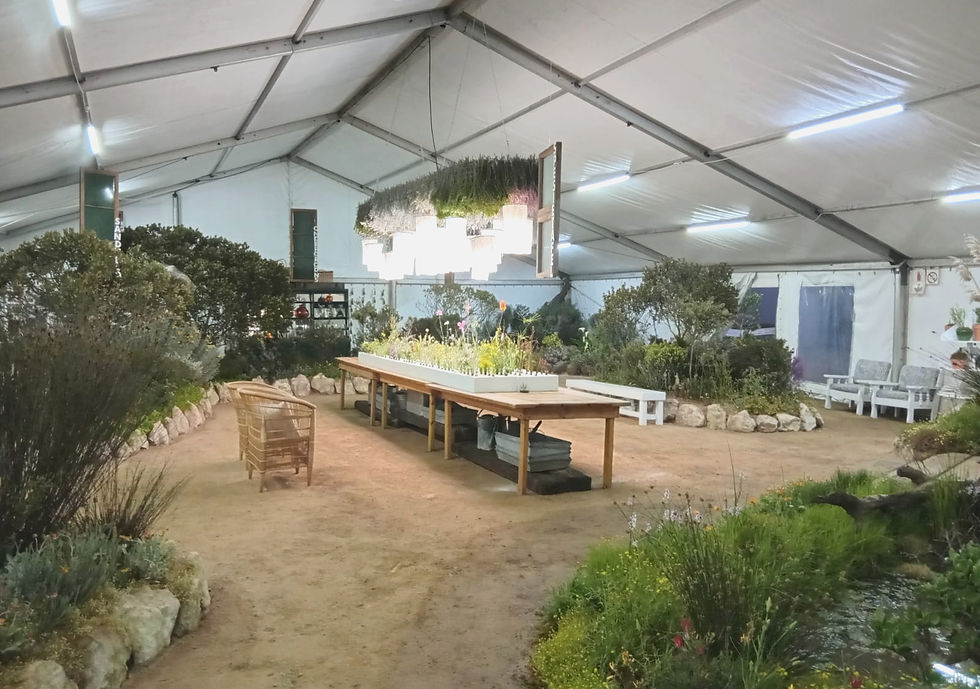
This is the time of year when my inner plant nerd really completely takes over! The Hopefield Fynbos Show just wrapped up its run from August 27–30, and as a proud Hopefielder, I came away feeling completely inspired.
I loved chatting with other plants and nature lovers at the species table, staring at the diversity, and repeating the wonderful volksnaam (local names) of our native plants.
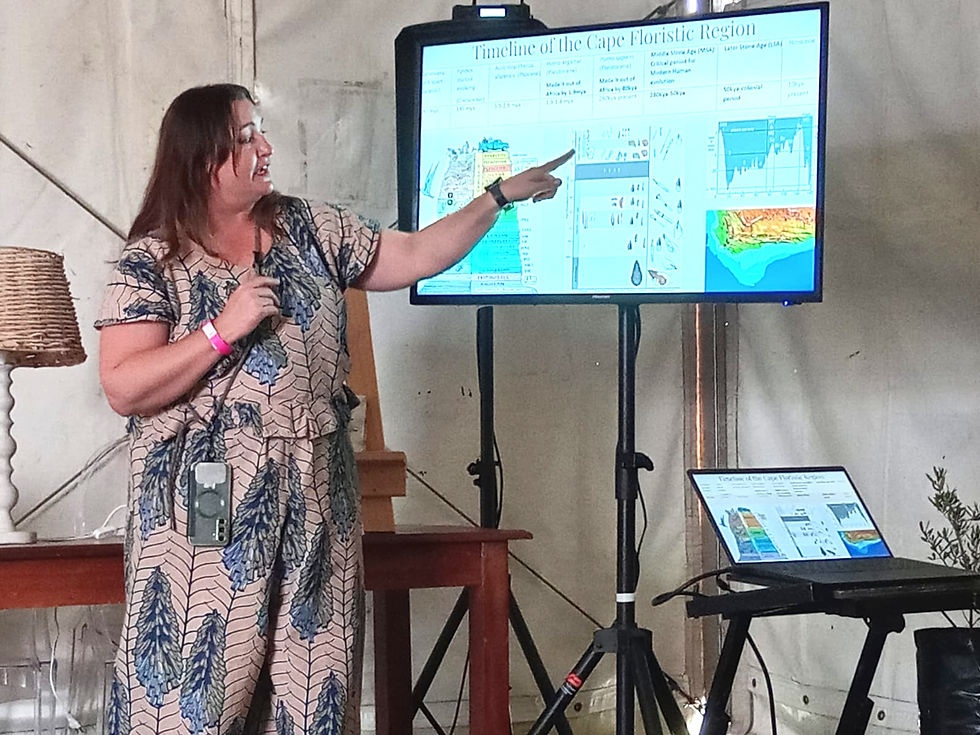
Listening to Leon Kluge share his infectious passion for our wild flora made me want to explore even more of the uniqueness of this Cape Floral Kingdom.
The talk by Gideon Melck about the iconic Kukamakranka (Gethyllis) and that of Dr Elzanne Singels, reminded me of just how many gifts the veld hides right in plain sight (for those who knows how and where to look for it).
Seeing the sheer abundance of traditional food and medicine—like Bruinsalie (Golden Sage) for chest colds, Wild Malva for skin inflammation, and Kooigoed for respiratory teas—made me realise again how deeply our ancestors listened to the earth.
It takes a village (and our farmers)
What fills me with the most hope is seeing how this conservation spirit is carried forward today. It’s not just a thing of the past.
I have so much respect for our local, conservation-oriented farmers and community members who actively protect and educate about these sensitive Sandveld biomes.
They are the modern keepers of the soil, working tirelessly to balance agriculture with the preservation of highly threatened Fynbos species.
The more I discover about our local climate and culture, the more passionate I get about protecting it. These stories belong to the land, and they must be told.
Let’s keep learning from our elders, checking on our wetlands, and treating this incredible natural heritage with the awe it deserves.



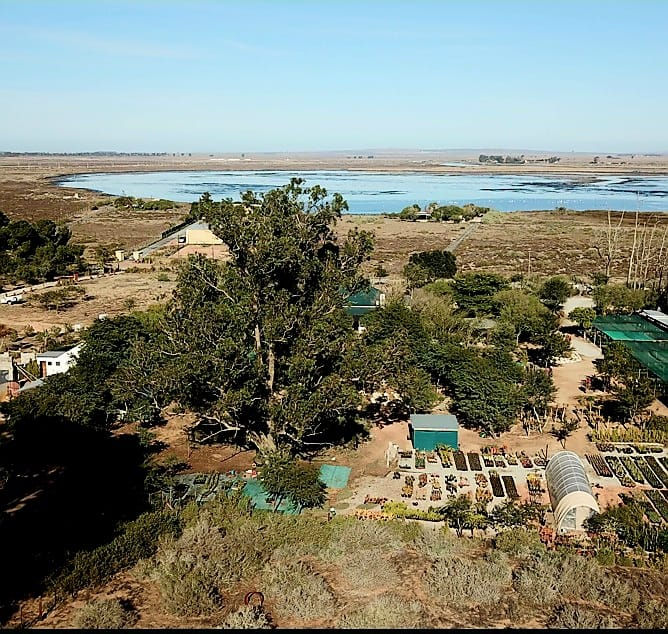
The physical demonstration of how to correctly interact with our natural history as is Bokmakierie Nursery purpose, needs to be wholly supported as "our" pioneering stronghold. A beautiful growing venture that we can physically find ways to fully support.